OC-008·Overdue Conversation·Cited · 8 sources
OverDrive Amplify Turns Libby and Sora Reading Activity Into Publisher Intelligence
OverDrive built a new product out of how reading happens inside Libby and Sora.
Published 2026.06.09Updated 2026.09.11MethodSend a correction
In this file
OverDrive markets Amplify as publisher intelligence drawn from reading activity in Libby and Sora. Its sponsored announcement describes aggregated, anonymized analytics. That documents the offering, not identifiable patron-record sales, actual buyer terms, or a verified consent violation. What the library authorized and can refuse remains the contract question.
I was deep down the Librar Labs research hole when I stumbled upon an ad in Publishers Weekly. One thing I learned in legaltech marketing is that you can buy these trade publication sponsored posts that look like real articles, interviews, thought pieces. They're designed to match the look and feel of the real thing. The tell on this one is at the bottom: “Sponsored by OverDrive.”
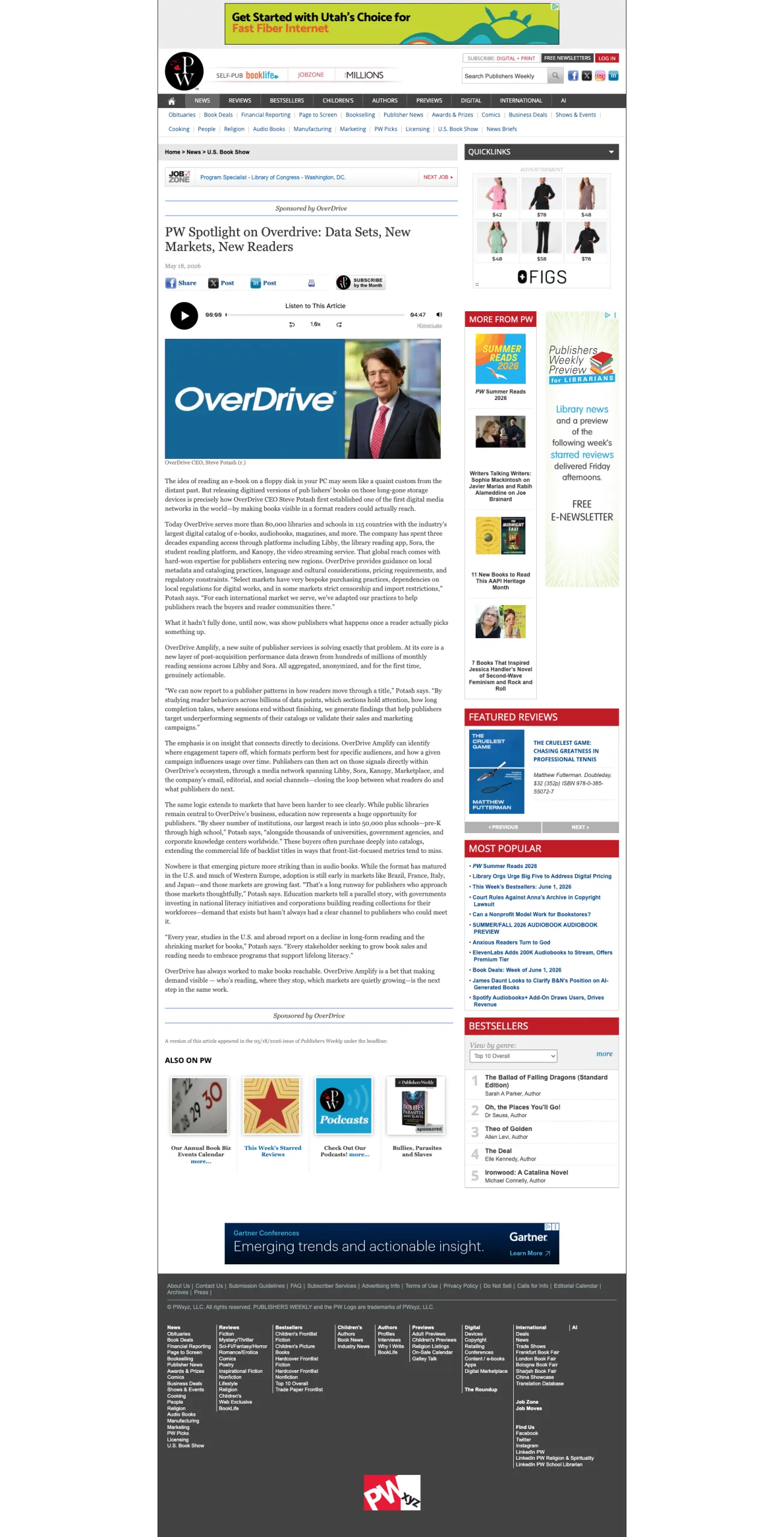
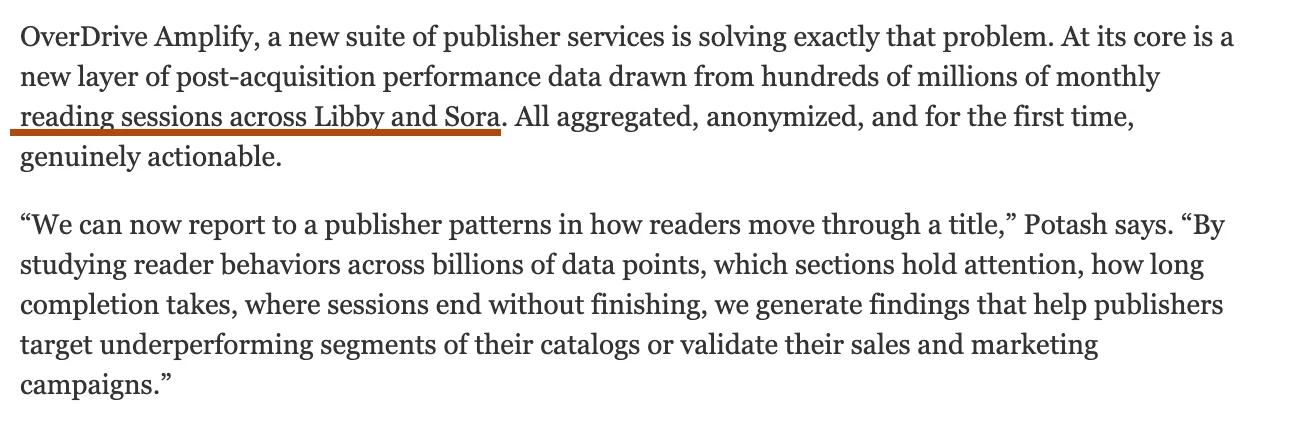
In my career as a public librarian and vendor, I have never heard nor used the term “post-acquisition performance data.” Because in the Libby and Sora apps, performance data is reader behavioral data. And we don't track reader behavioral data. That's why the phrase sounded so out of place.
But inside Libby and Sora, the advertised measures include borrowing and how readers move through a title. The announcement is evidence of what OverDrive says it can report, not an independent audit of every event collected.
In OverDrive's own Publishers Weekly spotlight, Potash spelled out what's for sale:
“We can now report to a publisher patterns in how readers move through a title. By studying reader behaviors across billions of data points, which sections hold attention, how long completion takes, where sessions end without finishing, we generate findings that help publishers target underperforming segments of their catalogs or validate their sales and marketing campaigns.”
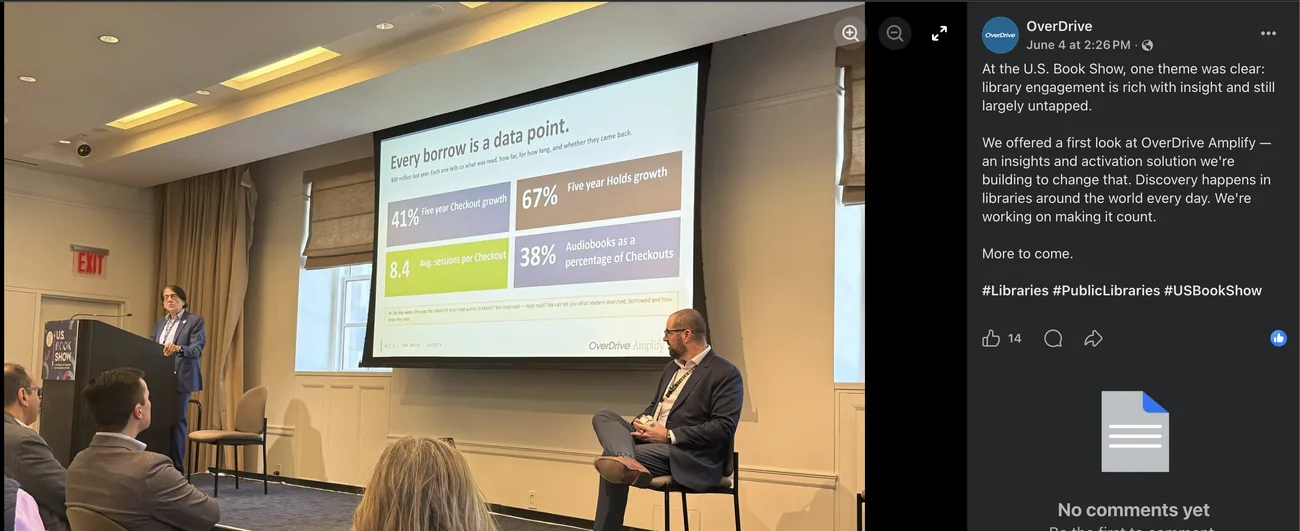
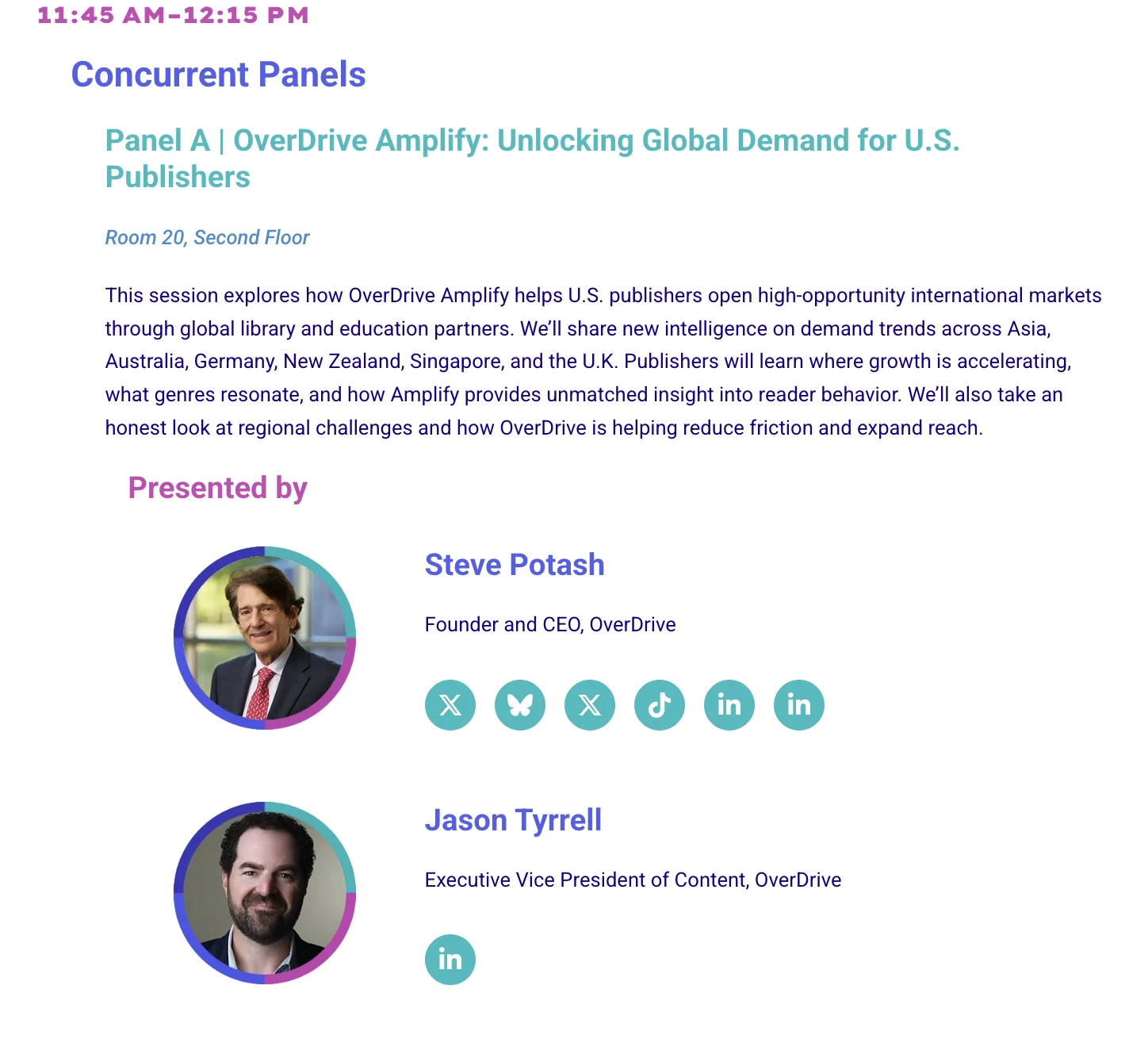
The pitch bears repeating, because it is the product. They said they can report to publishers, in their own words:
- Which sections hold attention
- How long completion takes
- Where sessions end without finishing
What's sold is the findings, not the sessions. The sessions stay at OverDrive.
My household doesn't use Libby or Sora. The sessions are the product, and I'd rather not supply them.
Who runs this now
Three weeks after that presentation, OverDrive announced that Potash was stepping down as CEO. After 40 years, the founder moved up to chairman on June 23, and the new chief executive is Marc DeBevoise, who came from CBS Interactive, Paramount and Brightcove. A week into the job, he told the tech newsletter Lowpass: "AI is the new frontier for us."
I'm not claiming a sale is coming. Nobody outside KKR knows that. What the record shows is narrower and still worth saying plainly: KKR has held OverDrive since 2020 inside a fund raised in 2017, and funds that age get harvested. Amplify was announced under Potash, four weeks before the CEO change. What Amplify becomes from here is an OverDrive decision under a chief executive who started in June. I have not found a public statement from him about Amplify, and I have not asked him for one.
Sources
- "PW Spotlight on OverDrive: Data Sets, New Markets, New Readers," Publishers Weekly, May 18, 2026 (sponsored spotlight). Read the spotlight on Publishers Weekly.
- "Newsmaker: Steve Potash," American Libraries, March 27, 2015. Read the 2015 Q&A.
- U.S. Book Show 2026 program, Panel A: "OverDrive Amplify: Unlocking Global Demand for U.S. Publishers." See the U.S. Book Show program.
- OverDrive Facebook post, June 4, 2026 (photo of the "Every borrow is a data point" presentation slide).
- OverDrive's own service descriptions: company.overdrive.com/publishers and company.overdrive.com/public-libraries.
- "OverDrive Appoints Marc DeBevoise Chief Executive Officer; Founder Steve Potash Named Chairman of the Board," OverDrive, June 23, 2026. Read OverDrive's announcement.
- "How Libby prepares for the AI onslaught," Lowpass, June 30, 2026 ("AI is the new frontier for us"). Read the Lowpass interview.
- "KKR Completes Acquisition of OverDrive," KKR press release, June 9, 2020 (investment from KKR Americas XII Fund). Read KKR's press release.
Filed June 2026. No corrections to date.